
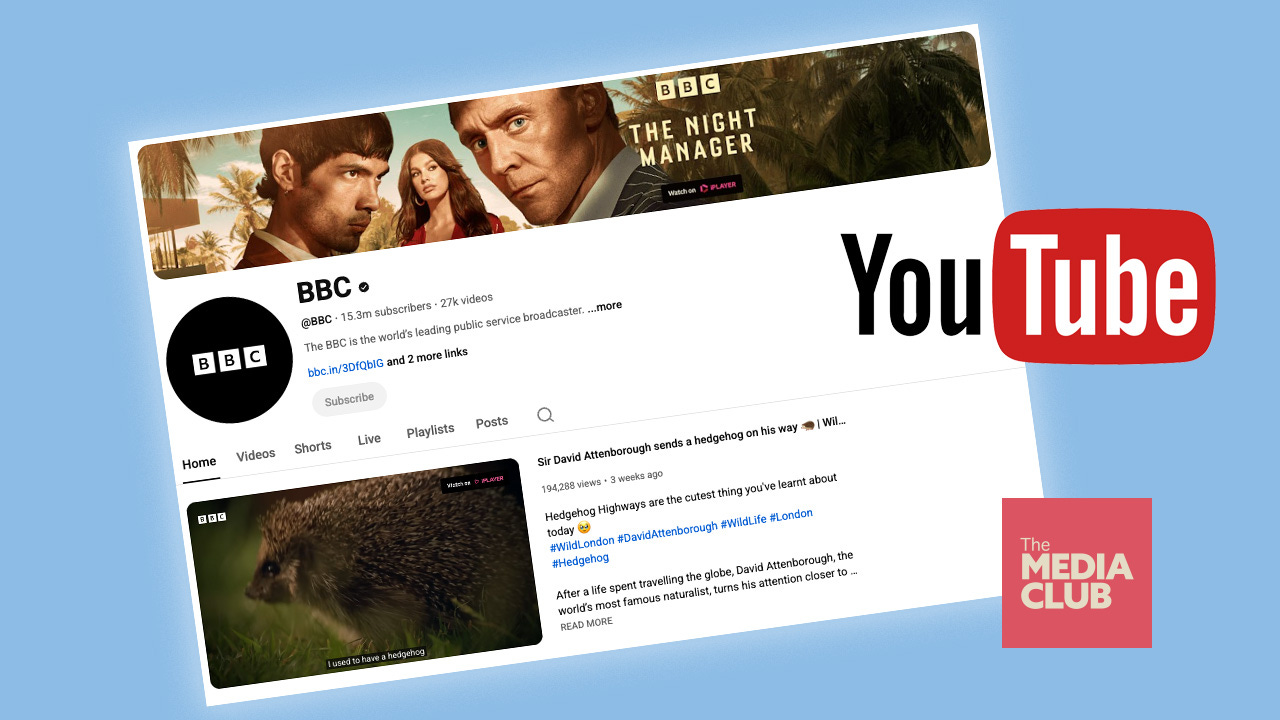
This week in the media, we’ve had Prince Harry facing off against the Daily Mail in high-stakes court drama, Netflix earnings revealing engagement growth essentially flat despite subscriber wins, and the BBC striking landmark deals with YouTube to produce bespoke content for the platform. Plus Hearst UK implementing AI amnesty programmes for staff training, Google officially surpassing Apple in annual revenue, and Brooklyn Beckham’s explosive Instagram statement against his parents dominating entertainment coverage.
If you missed Friday’s The Media Club, I discussed the Prince Harry’s high-stakes court battle against the Daily Mail with TV critic Rhianna Dhillon and Steven D Wright, examining how both sides bring robust arguments that could make this one particularly messy. We also explored the BBC’s landmark deal with YouTube to produce bespoke content for the platform and what it means for your feed, plus Channel 4’s commercial pivot with their first in-house production chief appointment, the government’s continued interference in the Telegraph deal, and we tackled the gossip columnists in our Audio Network quiz. Have a listen (or watch).
Part 1:
Part 2:
The Media Show (21st January)
Katie Razzall examined how international media are reporting rising tensions between the US and Europe over Greenland, featuring insights from Danish political analyst Elisabet Svane at Politiken and Washington Post White House reporter Michael Birnbaum. Former BBC World Service head Jamie Angus argued that the BBC should move faster into unblockable technologies to reach people in repressive regimes, particularly as Iran has been restricting internet access for nearly two weeks. The show also explored Australia’s under-16s social media ban one month on, with Bronte Gossling from the Sydney Morning Herald reporting mixed results as the UK considers similar moves. They unpacked the media storm surrounding Brooklyn Beckham’s bombshell Instagram post about his family’s relationship with traditional media, questioning whether celebrities still need newspapers when they control their narrative through social platforms.
Media Confidential (19th & 22nd January)
Alan Rusbridger and Lionel Barber welcomed Jimmy Wales, founder of Wikipedia and author of “The Seven Rules of Trust,” discussing how the online encyclopaedia has evolved to handle new digital challenges like bots and AI. After Elon Musk branded the site “Wokepedia” and launched Grokipedia as a competitor, they explored regulation and how to address threats from the far-right whilst rebuilding trust in an age of disinformation. They also spoke to media researchers Georgina Bourne and Justin Lewis from the British Academy, whose new report on public service media examines what the data really says about BBC reform. They discussed ensuring the broadcaster’s independence and accountability, international lessons from Germany and Scandinavia, and how to future-proof against Nigel Farage’s promises to abolish the licence fee.
Roger Bolton’s Beeb Watch (22nd January)
Roger Bolton interviewed Professor Lee Edwards from the London School of Economics and Chair of the Media Reform Coalition about the government’s green paper on the BBC’s future. Edwards argued the consultation represents a “blueprint for permanent decline,” examining proposed funding changes including a possible household levy, principles of universality and public service, and questions about government involvement in BBC governance. The discussion covered balancing public purpose with commercial pressures, the BBC’s role in local media, ideas for public engagement and accountability, and funding for the BBC World Service. Edwards provided practical advice on how listeners can respond to the consultation and join the wider debate about the corporation’s future.
Insiders: The TV Podcast (23rd January)
Peter Fincham and Jimmy Mulville explored Mediawan’s potential acquisition of North Road, examining the broader risks of buying creative companies built around individual talent. They discussed the BBC’s decision to commission bespoke content for YouTube, though got confused about the economics and what that signals about platform strategy, public service broadcasting, and where audiences are really heading. The conversation also covered Amol Rajan’s decision to step away from Radio 4’s Today programme, prompting wider discussion about control, reach, lifestyle, and whether you should ever “quit the hit.” Plus tales of attempts to buy BBC Three for £1 and an inability to use streaming services. I’m also sure that not knowing that C4’s streaming isn’t called All 4 or that it offers a paid ad-free version is perfectly fine for two people who run major TV production companies.
TellyCast (22nd January)
Justin Crosby spoke to Samantha Sun from ReelForce to unpack how micro drama really works – the fastest-growing scripted format in global digital video that UK producers are only beginning to understand. Sun shared her journey from early Chinese-backed micro drama platforms to producing some of the biggest-budget vertical dramas made in the UK, explaining how vertical, app-based scripted series operate commercially. The conversation covered the scale, speed and commercial potential of micro drama, how content discovery works through social media advertising, and the business models driving this new scripted economy.
The Rest Is Entertainment (20th, 22nd & 23rd January)
Richard Osman and Marina Hyde looked at Kevin Spacey’s claim of “life-threatening sex addiction” in his $80 million insurance dispute for House of Cards, the return of K-pop superstars BTS and what makes them different from American bands, and whether writers make good Traitors contestants. Marina delivered a special take on Brooklyn Beckham’s explosive Instagram statement against his parents, detailing the dire tirade about being controlled and commercially exploited by the Beckham family brand. They also looked at the secret PR war over Graham Norton’s sofa seating arrangements, examined whether the Salt Path scandal has actually changed publishing, and questioned if the Marty Supreme marketing campaign represents the greatest film promotion of all time.
The Media Odyssey (21st & 22nd January)
Evan Shapiro and Marion Ranchet looked at major media milestones. First, they provided a live earnings breakdown of Netflix’s latest quarterly results, separating headline wins from structural concerns. While revenue, profit, and subscriber figures beat expectations, deeper engagement metrics told a more cautious story, with total viewing reaching 191 billion hours annually but only up 1 billion hours half-over-half. They also looked at Google officially surpassing Apple in scale and HBO Max’s long-awaited European launch, explaining why both moments matter for platform economics, global strategy, and competitive positioning in an increasingly crowded and expensive market.
Campaign Podcast (20th & 22nd January)
Campaign’s journalists who attended the Year Ahead Breakfast Briefing at The National Gallery discussed what industry leaders predict for 2026. Martin Beverley from Ace of Hearts spoke about the importance of joy, whilst Netflix’s Ed Couchman said 2026 will be the year of fandom as consumers want more from brands. They also aired a leadership panel with CEO Dan Clays from Omnicom Media EMEA, Katie Mackay-Sinclair from Mother, and Magnus Djaba from Publicis Groupe discussing AI’s impact, structural agency shifts, and caring for people during times of change.
The Media Leader Podcast (19th January)
Jack Benjamin interviewed Martin Wooley from What’s Possible Group and Paul Phelps from AMS Media Group, co-founders of the Alliance of Media Independents (AMI). The initiative launched a year ago to share knowledge and support independent media agencies, growing to over 30 members with combined billings rivalling global holding groups. They discussed why the alliance was founded, benefits delivered to members, expansion plans, and why independents might benefit from the consolidating agency landscape. Wooley noted that half the pitches in their business are now indie-only, suggesting something fundamental has changed in the market.
The Media Voices Podcast (19th & 26th January)
Peter Rustin presented episodes from the Definitive AI Forum for Media. The first featured a panel discussion on how AI is reshaping B2B data and information companies, with leaders from LexisNexis, Lions Intelligence, Global Water Intelligence, and William Reed discussing approaches to partnering and licensing content to AI companies whilst protecting IP and value. The second episode showcased Toby Wiseman, MD for Content at Hearst UK, discussing what AI means to magazine publishers, including staff training through an “AI amnesty,” regular sessions, and crafting AI policies while maintaining that AI should be invisible and never replace human creation.
The Radio Academy Podcast (21st January)
Georgie Jameson concluded their Meet the Experts series focusing on Production Companies. The episode featured industry leaders Paul Fearnley from Audio Always, Rachel Barton from We Are Grape, Rachel Simpson from Spotify, Rebecca Maxted from Blanchard House, and Steve Rajam from Overcoat Media sharing insights and advice on having a lasting career in radio and audio production. They discussed the evolving landscape of audio content creation, business development strategies, and the skills needed to succeed in the production company ecosystem.
Podnews Weekly Review (23rd January)
James Cridland and Sam Sethi examined whether subscriptions are outpacing advertising revenue, unpacking Goalhanger’s subscription economics which show £20 million gained from premium memberships versus £2 million lost in ad revenue. They discussed the money and mechanics behind paid memberships, how platforms are reshaping podcast reach, and why quality and openness still matter. The hosts explored YouTube’s AI stance versus tool rollout, the BBC’s YouTube content strategy, and shared exclusive industry insights including major changes in podcast measurement and discovery systems.
When It Hits the Fan (21st January)
David Yelland welcomed Anoushka Mutanda-Dougherty from the BBC podcast Fame Under Fire to examine how public opinion is really being shaped in dubious corners of the internet. They explored the trial of rapper Diddy, explaining how he may have actually benefited from wild social media accusations portraying him as the Devil, allowing his PR team to capitalise on the fact that prosecution evidence seemed tame by comparison. The extended edition examined how the PR world might learn from Candace Owens’ methods – however unpalatable – as she influences millions through her “personal PR powerhouse” approach of turning content into multiple revenue streams.
Mixed Signals from Semafor Media (23rd January)
Ben Smith and Max Tani interviewed Stephen Dubner, co-creator of Freakonomics and host of one of podcasting’s most enduring shows. Dubner discussed why he never sold to Spotify, how The New York Times shifted from telling readers things to telling them what to think, and his new self-funded TV experiment that’s “like laundering podcast money.” He explained how he accidentally got sucked into the Blake Lively-Justin Baldoni gossip vortex, made the case for prediction markets over pundits, and revealed why he’s considering buying a pizza place with a Michelin-starred chef who hated his soup. The conversation covered the real reason insider trading bans are absurd and why long-form podcasting isn’t dead yet.
Channels with Peter Kafka (21st January)
Peter Kafka interviewed Chuck Klosterman about his new book “Football” and what the sport’s dominance reveals about American media and culture. Klosterman explained why (American) football is a “completely mediated” experience designed for television viewing, how video games helped rewire fan understanding, and how gambling created a “fake game” sitting on top of the real one. They discussed why the concussion panic faded despite continued hits, football’s role as the biggest show on TV, and why it’s basically the only reason some networks exist. The conversation examined whether this cultural dominance will continue forever.
The Grill Room (20th & 23rd January)
Dylan and Julia spoke to co-founders Justin Smith and Ben Smith to discuss their recent $30 million financing at a $330 million post-money valuation, addressing industry scepticism and justifying the mathematics behind their events-driven media model. They rejected characterisation as purely events-focused whilst acknowledging the integrated business approach. They also broke down Netflix’s earnings and Ted Sarandos’s candid take on television’s state, plus Neal Mohan’s annual letter outlining YouTube’s AI-shaped future, examining the challenge of capturing attention in an oversaturated media ecosystem.
The Town with Matthew Belloni (21st January)
Matt Belloni interviewed Eugene Hernandez, director of the Sundance Film Festival, discussing the last year in Park City, the decision to leave Utah, and expectations for Boulder, Colorado. They shared favourite stories from years of festival attendance and examined what the move means for independent film culture. Hernandez explained the practical and cultural reasons behind relocating one of cinema’s most important festivals, plus the challenges of maintaining Sundance’s identity whilst adapting to new locations and industry realities.
On the Media (21st & 24th January)
Brooke Gladstone and Micah Loewinger provided an extended analysis of Trump’s war on the Federal Reserve, featuring economist Mark Blyth explaining why central bank independence matters and the dangers of political interference. They also explored Trump’s plans and ICE’s recruitment drive, examining surveillance technology including the mobile Fortify app that scans faces and overrides birth certificates. They revealed how ICE launched a full-throttle recruitment campaign using methods similar to selling consumer products whilst carrying out mass deportation policies.
The Business (23rd January)
Kim Masters interviewed former Viacom CEO and MTV co-founder Tom Freston about his memoir “Unplugged: Adventures from MTV to Timbuktu.” Freston reflected on his vagabond youth, the birth of MTV, and years working under billionaire mogul Sumner Redstone, sharing career highlights from shaping modern media. He weighed in on the Warner Bros succession fight, arguing that Netflix may be the legacy studio’s best-fit suitor. The conversation covered cable television’s wild west years and the challenges of building MTV during the industry’s formative period.
The Ankler Podcast (22nd January)
Elaine Low, Sean McNulty, and Natalie Jarvey explored what “Heated Rivalry” reveals about minting new stars amid the collapse of monoculture and rise of social media. They predicted 2026’s top stars, shared behind-the-scenes insights from casting directors on finding Hudson Williams and Connor Storrie plus that pivotal chemistry test, and explained how Snap is building success paths for creators. The discussion covered the latest WBD-Netflix merger saga with all-cash offers and Matthew Frank’s update on Netflix earnings calls and talk-show prediction market bets.
Spot any media podcasts we’ve missed? Reply and let us know! And if you haven’t already, subscribe to The Media Club on your favourite podcast app or catch us on YouTube. Got this forwarded to you? Then subscribe…
Didn't expect this take on the BBC needing unblockable tech for repressive regimes, but it's a critical point for human rights. So vital to support democracy and counter online restrictions, especially with current situations like Iran restricting acces. It reminds me of your excellent piece on global media freedoms, actually.